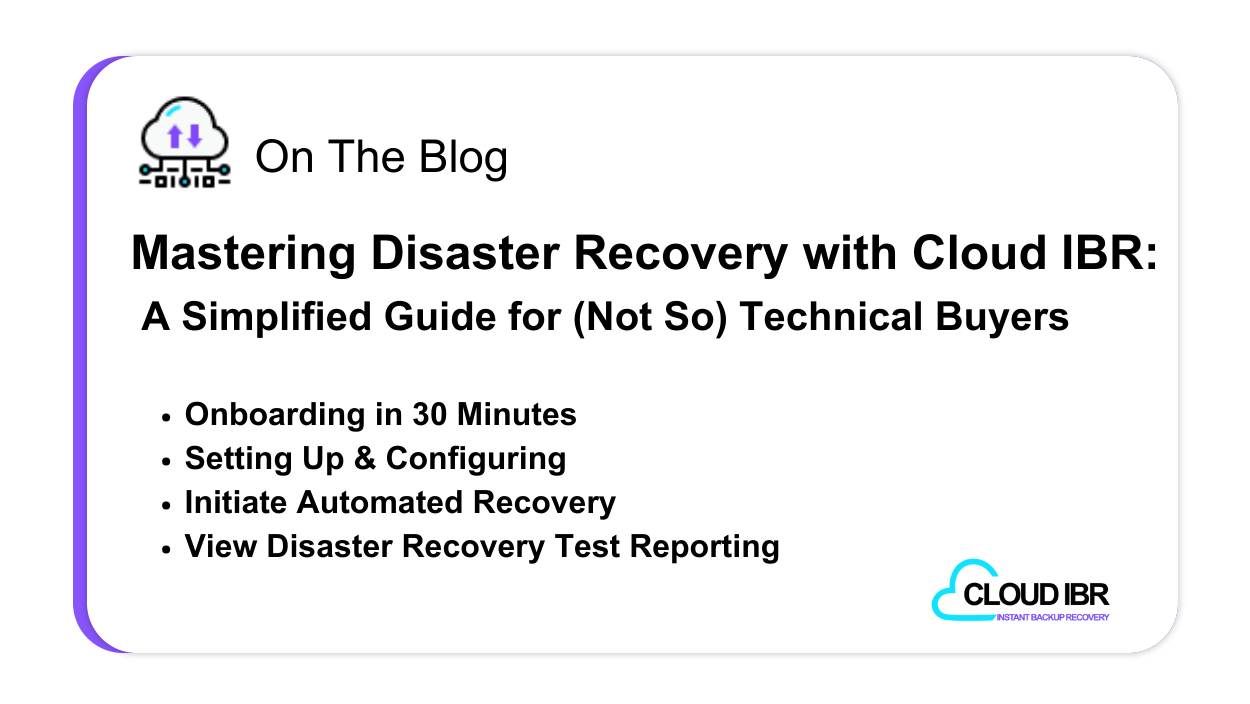
Cloud IBR Expands Disaster Recovery for MSPs — Scalable, on-demand recovery without idle infrastructure

READ PRESS RELEASE

VeeamOn 2025 Session Replay: Resilient On-Demand Disaster Recover

Disaster recovery doesn’t need to be complex – or expensive.

In this featured VeeamON 2025 session, Veeam’s Anthony Spiteri and Vito LoCascio break down how MSPs and IT teams
are using Cloud IBR + Veeam to simplify disaster recovery with automation, object storage, and on demand infrastructure.

Key Takeaways from the Session:

  • How object storage solutions like Veeam Data Cloud Vault simplify backup and recovery workflows
  • How Cloud IBR automates the building of recovery environments on-demand, with no manual scripting
  • How MSPs and internal IT teams can deliver scalable, cost-effective disaster recovery without maintaining hot-site infrastructure and overhead
  • Why on-demand recovery is critical to staying resilient against ransomware and operational disruptions

Ready to Close Your Disaster Recovery Gap?

Book a consultation today!

“If you’ve got backups, you’ve got on-demand DR with Cloud IBR.”
– Anthony Spiteri, Principal Analyst, Veeam

FAQs

What’s the fastest RTO I can promise with recovery‑on‑demand?

Under two hours for most SMB estates. If a workload needs minute‑level recovery, keep it on replication DRaaS. est. Ea, consequatur.

What’s the difference between backup and disaster recovery?

Backups protect your data. Disaster recovery restores your entire system, including infrastructure and operations, so your business keeps running.

How is Cloud IBR different from traditional DRaaS?

Cloud IBR recovers Veeam backups on demand using bare metal cloud infrastructure that you only pay for when it’s in use, no need for constant replication, hot sites, or complex failover orchestration.

Do I need to change how I back up my clients?

No. Cloud IBR works with your existing Veeam backups stored in object storage (e.g. Wasabi, Backblaze B2, Cloudian. Veeam, Data Cloud Vault, or under management with Veeam Cloud Connect).

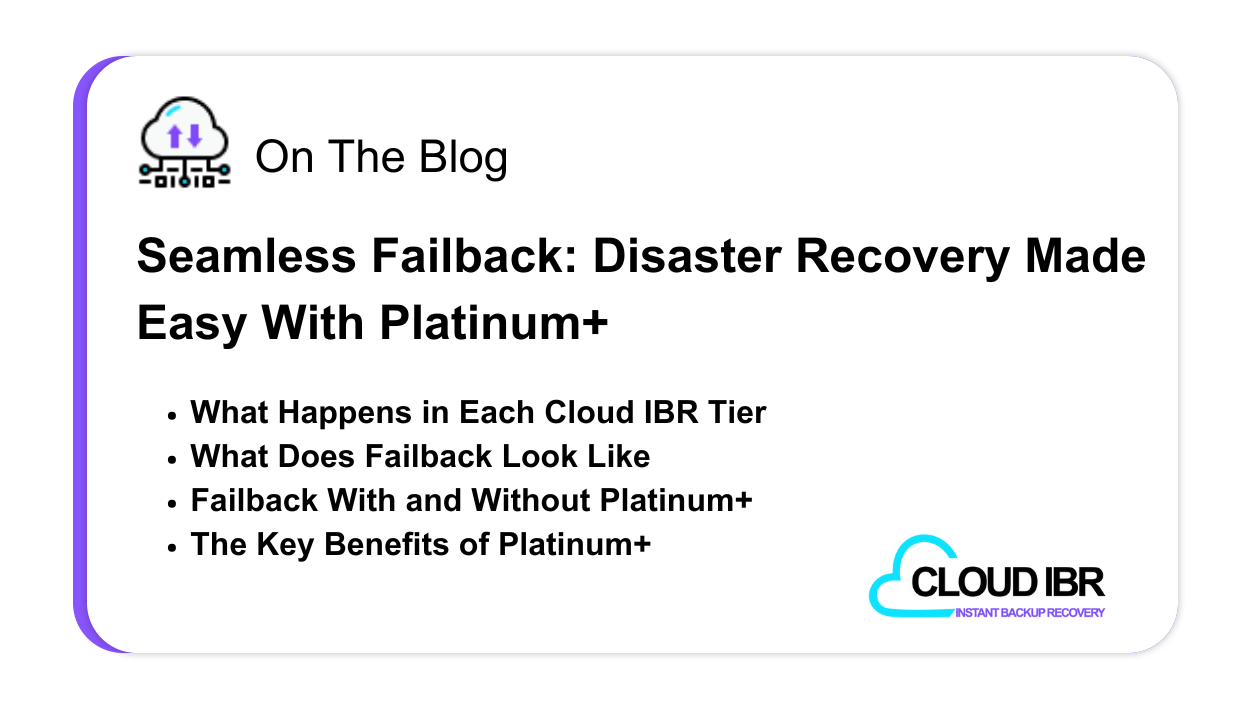
What’s the difference between failover and failback?

Failover shifts operations to a temporary recovery environment. Failback returns systems to the primary environment once it’s restored.

Learn More About Failover vs Failback

Who handles failback with Cloud IBR?

With Silver and Gold tiers, your team manages failback. With Platinum+, Cloud IBR’s Veeam Certified Experts manage the entire failback process for you.

Can I test failover before a real disaster?

Yes. Cloud IBR supports automated DR testing directly from the portal so you can validate backups and prove recoverability to clients and insurers.

How does pricing work?

You only pay when you initiate a failover or run a test. There are no idle infrastructure fees, making Cloud IBR financially accessible even for small clients.

Can I offer Cloud IBR as a white-labeled service?

Yes. MSPs can brand Cloud IBR as their own and offer fully managed DRaaS under their name, with Cloud IBR as the backend engine.

Does Cloud IBR replace my backup software?

No. It orchestrates failover from existing Veeam backups stored in object storage or a VCSP repository.

SHARE

Table of Contents